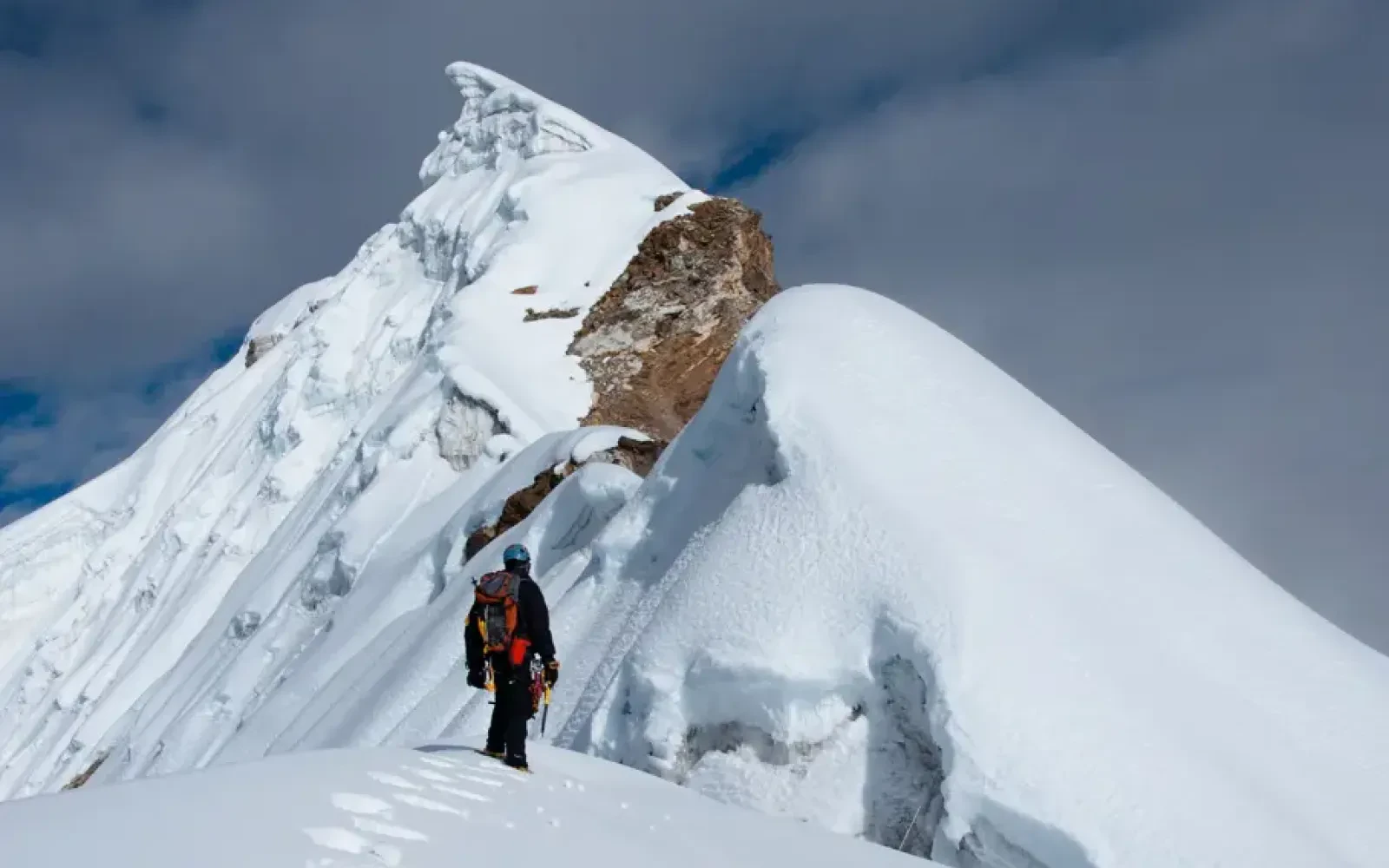
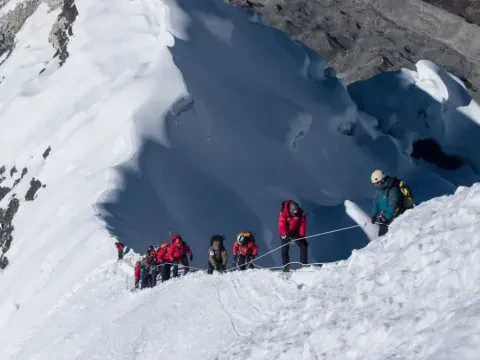
The Island Peak climbing with the Everest Base Camp trek is an incredible experience in the Himalayas of Nepal. It is intended for fiery and physically fit trekkers with practically zero experience in mountain climbing. Island Peak 6,189m is one of the major climbing peaks in the Everest region of Nepal with a great and profoundly glaciated West Face that ascents from the Lhotse Glacier. Being one of the trekking peaks, Island peak is certainly not a troublesome attempt for an apprentice climber wishing to enter the enigmatic universe of mountain adventure. Several climbers rush to Nepal consistently to get an allowance for Island Peak climbing. Our experience likewise brings us into the heartland of the Khumbu Valley and Sherpa culture. Prior to scaling the peak, we likewise visit, potentially the most prominent trekking goal on the planet – Everest Base Camp 5,357m and Kala Patthar – for the very close views of mount Everest and other high mountains.The Island peak climbing trip has legitimate and steady acclimatization at reasonable altitudes. The trek starts from and arrives at the most renowned airstrip on the planet, the Lukla Airport in the Everest Region.
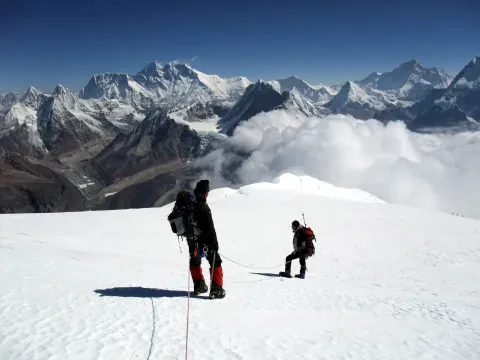
If you're looking to climb one of Nepal's many trekking peaks, Mera Peak is a great choice. The summit offers breathtaking views of 5 of the 6 tallest mountains in the world.: Everest, Lhotse, Cho Oyu, Makalu, and Kanchenjunga. Although the trek is challenging due to the altitude, basic mountaineering skills are enough to handle the high-elevation glacier crossing. At 6476m, Mera Peak is often referred to as Nepal's highest trekking peak. The most common route and the one described in this itinerary involves taking a flight to Lukla and heading east to Zatrawala pass and into the Hinku Valley, instead of traveling north to Namche Bazaar. Another option, which is longer, is to travel south from Lukla and Climb up the beautiful Hinku Valley.
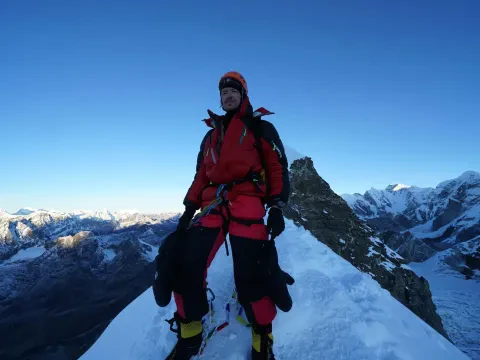
The sublime views from mount Lobuche make it one of the most quintessentially well known mountain trek, notwithstanding its trouble level being more testing than that of close by Island Peak. From the summit, you’ll have the opportunity to gaze out at bold Everest, and also a few peaks on the Tibetan side of Rongbuk. Climbing Lobuche peak is an ordeal you’ll cherish for a lifetime.We prepare for the Lobuche peak climbing with a stop at the Everest Base Camp. Here, you’ll figure out mountain life and an exercise on climbing. Our bodies will likewise acclimatise for the thin air on Lobuche. Altitude sickness is something we endeavor to evade, and our carefully made schedule is intended for ideal change. In transit, we’ll climb the “dark shake” of Kala Patthar, and experience a stunning Himalayan scene.Obviously, it’s as much about the trip as the goal. Our trek will bring us through enchanting Sherpa towns, where you’ll encounter an essence of how people survive in probably the most cold residences on Earth, and discover that friendliness genuinely guarantees no dialect. Your photos will shock, and your recollections will flabbergast.
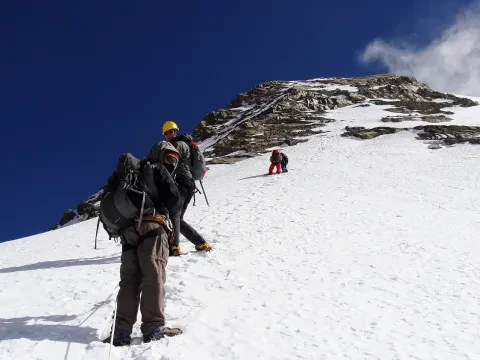
Pisang Peak, situated amidst the massive mountain ranges of Annapurna I and Manaslu, is a non-expedition peak in Nepal. The peak rises from Pisang village and yak pastures in a uniform slope of ice and snow to its summit. It is known as one of the simpler climbing peaks in Nepal. The trail leading to the base camp from Pisang town passes through sparse woods and fields and reaches a Kharka at 4,380m, the perfect spot for setting up the base camp. The high camp is set up on the South-West ridge at an altitude of 5,400m, mostly covered by snow during Spring and Autumn. The well-defined ridge leads to the final snow slope, which is steep but not too difficult to reach the summit. The descent is made on the same trail.This peak-climbing trek is a challenging adventure, owing to the rugged mountain landscape. The trek begins in the lush paddy fields and gradually gains elevation, passing through oak and pine forests before finally ascending into the high desert country at Manang, 3597m. The descent is equally breathtaking and varied. Strenuous trekking is well rewarded at both low and high elevations, en route to the Thorung La Pass. The diverse ecosystems, varied cultures, and ever-changing scenery - from rich, green paddy fields and oak forests to dry deserts and the world's deepest gorge - make this peak climbing trek one of the most popular treks in the world.
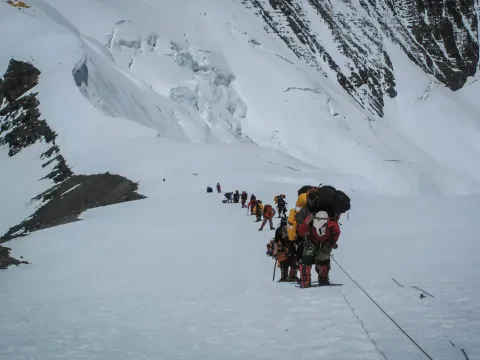
The Everest Expedition in the Himalayas presents one of the world’s most noteworthy physical and mental adventures with such a great sentiment of pride and the feeling of being the bravest individual on the planet. The South Col route on the Nepal side of Mt. Everest is the route taken by Sir Edmund Hillary and Tenzing Norgay Sherpa who was the first to climb Everest effectively on 29 May 1953 in this way turned into the world’s most well-known saints of the experience climbing. Expedition to mt. Everest has been effectively guided and climbed commonly from that point forward, yet this ought not to calm planned Everest climbers into carelessness – climbing Everest is a definitive test. To join our International Everest Expedition group in Nepal, you should have broad mountaineering background in climbing campaigns in any event of 6000 meters and also an affair of scaling troublesome snow-capped mountain tops, ideally, some climbing knowledge of the 7000 or 8000 meter tops in the Himalayas. Albeit settled ropes will be utilized, Everest campaign individuals must have the capacity to rise and drop settled lines freely and be capable of cramping on extremely soaked ice and snow inclines.
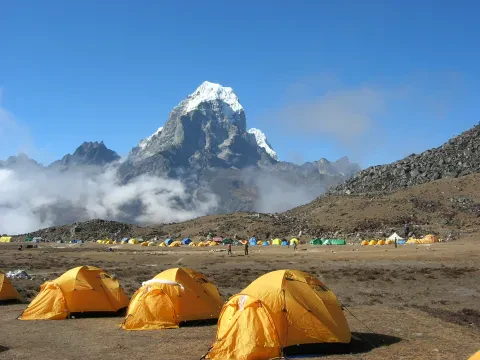
One of the world's most enchanting and captivating peaks is the staggering mountain of Ama Dablam, which stands tall amongst several other mountains in the Everest region, reaching a height of 6812m. The Amadablam Expedition is considered one of the most technical and challenging climbing adventures in the Himalayas.Ama Dablam has a lasting impact on many trekkers in Nepal, as it is perhaps the most stunning mountain on the trek to Everest Base Camp. It offers a magnificent view south of Mt. Everest and Mt. Lhotse in the Khumbu region of the Himalayas, and it is a majestic pyramid of ice with vertical walls and sharp, exposed ridges.The climb follows the Southwest ridge of the mountain, which is the usual route for climbing. This route has three camps above the base camp, and previous climbing experience is necessary as it demands high technical skills. Additionally, it is a highly challenging mountaineering adventure. Despite being a six-thousand-meter mountain, it is an expedition mountain, unlike the other climbing peaks.Ama Dablam is the most prominent mountain in the region, but climbing it is a daring task that requires several days, of training, skills, and experience. The Amadablam Expedition provides a thrilling climbing experience for mountaineers.
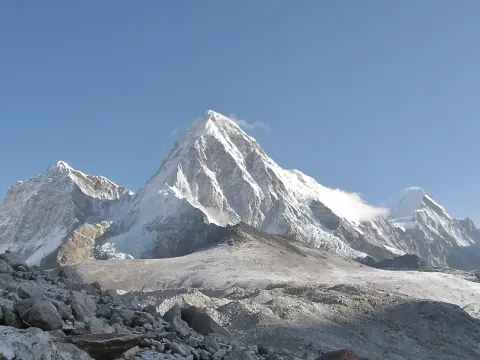
The most mainstream mountain for individuals who wish to climb the 7000m peak in the Himalayas of Nepal is mount Pumori scales 7161m above sea level. Mount Pumori lies in the Khumbu region with the pyramid molded and stunningly looking Peak 8 Km west of mount Everest along the Nepal-Tibet border. Mount Pumori commands the horizon behind Kalapatther 5643m, which resembles a cluster of shakes on Pumori's southwest edge. Pumori Expedition demonstrates perfect planning for those trying for the more specialized 8000m peaks including mount Everest. The pinnacle was named “Pumori” by George Leigh Mallory, which evidently signifies “Unmarried Daughter” in the Sherpa dialect. The best season to investigate this dazzling pinnacle is September to November and March to May.
Share your travel dreams with us and we will create a customized itinerary that matches your preferences and budget.