Few adventures in the world can rival the allure of trekking to the base of Mount Everest. The Everest Base Camp trek is not just a walk through the Himalayas; it is a life-changing journey into the heart of Nepal’s Khumbu region, where breathtaking landscapes, ancient monasteries, and the indomitable spirit of the Sherpa people merge to create an unforgettable experience. At an altitude of 5,364 metres (17,598 feet), Everest Base Camp offers trekkers the closest view of the world’s highest peak without embarking on a full-scale expedition to the summit.
In this article, we’ll explore everything that makes the Everest Base Camp trek extraordinary—from its history and route to the cultural encounters and physical challenges that shape this once-in-a-lifetime journey.
A Trek with History and Legacy
The Everest region has captivated explorers for nearly a century. The first successful summit of Mount Everest in 1953 by Sir Edmund Hillary and Tenzing Norgay Sherpa transformed the region into a global icon of adventure. Today, thousands of trekkers follow in their footsteps—not to conquer the peak, but to stand where expeditions begin, at Everest Base Camp.
The trek is more than just a physical challenge; it is a chance to connect with the legacy of mountaineering pioneers and to immerse oneself in the culture of the Sherpa people who have guided climbers and trekkers for generations.
The Route to Everest Base Camp
Most treks to Everest Base Camp begin with a thrilling flight from Kathmandu to Lukla, often described as one of the most exciting airstrips in the world. From here, trekkers start their journey, weaving through traditional villages, suspension bridges, and rhododendron forests before ascending into alpine terrain.
Key stops along the route include:
· Namche Bazaar (3,440m): The bustling hub of the Khumbu, Namche is a vibrant market town and acclimatization stop with stunning views of Everest and Ama Dablam.
· Tengboche (3,860m): Famous for Tengboche Monastery, where trekkers can witness Buddhist ceremonies against the backdrop of the Himalayas.
· Dingboche (4,410m): A picturesque village offering acclimatization hikes and expansive views of snow-capped peaks.
· Lobuche (4,940m): A small settlement en route to the base camp, surrounded by dramatic glacial scenery.
· Gorak Shep (5,164m): The last stop before Everest Base Camp, also the starting point for the hike up Kala Patthar (5,545m), which provides the best panoramic view of Everest.
The trek generally takes 12–14 days, allowing time for acclimatization to prevent altitude sickness.
Scenery Beyond Imagination
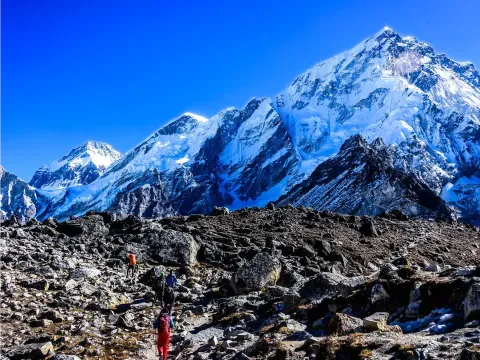
The Everest Base Camp trek offers some of the most spectacular scenery in the world. From the lush forests of the lower Khumbu to the stark, glacial landscapes higher up, the diversity is breathtaking. Trekkers pass beneath towering giants such as Lhotse, Nuptse, Ama Dablam, and Everest itself.
The highlight for many is not just reaching Base Camp but also climbing Kala Patthar, a viewpoint that provides unparalleled sunrise or sunset vistas of Everest. Few experiences can match watching the first light of day paint the summit of the world’s highest peak.
Cultural Encounters with the Sherpa People
One of the most enriching aspects of the trek is the chance to interact with the Sherpa community, renowned for their mountaineering skills, resilience, and hospitality. Sherpas are deeply rooted in Tibetan Buddhist traditions, which is evident in the monasteries, prayer flags, and mani walls that line the trail.
Trekkers often spend evenings in local tea houses, where they can enjoy Sherpa hospitality, sample Nepali cuisine like dal bhat, and hear stories about mountaineering and life in the Himalayas. This cultural immersion adds depth to the trek, transforming it into more than just a physical journey.
Challenges of the Trek
While the Everest Base Camp trek is achievable for many, it is not without challenges. Trekkers must prepare for:
· Altitude: The trek ascends to over 5,300m, where the air is thin, and altitude sickness can be a serious risk. Proper acclimatization is essential.
· Physical Demands: Though not a technical climb, the trek requires long days of walking (5–7 hours on average) over rugged terrain.
· Weather: Conditions in the Himalayas can be unpredictable, with cold temperatures, snow, and strong winds at higher altitudes.
Preparation, fitness, and the right gear make all the difference. Many trekkers train months in advance with cardiovascular exercises, strength training, and long hikes to build endurance.
Best Time to Trek
The best times for the Everest Base Camp trek are:
· Spring (March–May): Clear skies, mild weather, and blooming rhododendrons make this a popular season. Climbers also gather at Base Camp for summit attempts, adding to the atmosphere.
· Autumn (September–November): Stable weather and crisp views of the mountains make this another peak season.
Winter and monsoon treks are possible but more challenging due to heavy snow or rain.
Accommodation and Logistics
The trek is supported by an extensive network of tea houses—family-run lodges that provide basic accommodation and meals. While amenities are simple, trekkers can expect warm meals, a bed, and a cozy atmosphere.
Increasingly, luxury lodges are also available, offering more comfort for those seeking an upgraded experience. Treks are usually guided, with local guides and porters ensuring safety, navigation, and cultural insights.
Why Trek to Everest Base Camp?
The Everest Base Camp trek is more than a bucket-list adventure—it’s a journey of discovery. Trekkers not only test their physical limits but also experience:
· A deep connection with nature in one of the world’s most stunning landscapes.
· Cultural enrichment through encounters with the Sherpa community.
· A sense of achievement from reaching one of the most iconic destinations in mountaineering history.
For many, the trek becomes a personal pilgrimage, offering moments of reflection, resilience, and awe that linger long after returning home.
Conclusion
The Everest Base Camp trek is not just about reaching a geographical point on the map; it’s about the journey itself—the breathtaking landscapes, the resilience required to trek at altitude, and the cultural encounters that leave lasting impressions. It is a transformative adventure that combines natural beauty with human spirit.
Standing at the foot of Everest, gazing at the towering peaks, one realises that this trek is not simply about conquering mountains, but about discovering one’s own strength, endurance, and sense of wonder.
For those seeking a challenge that blends physical adventure with cultural immersion, the Everest Base Camp trek remains one of the greatest journeys on Earth.
Key Takeaway:
The Everest Base Camp trek is a demanding yet rewarding adventure offering stunning Himalayan views, Sherpa culture, and the chance to stand at the