Flying a drone in the Everest Base Camp (EBC) region is allowed, but only under strict drone regulations in Nepal and with proper authorization through the Everest Base Camp drone permit process. The Everest region lies within the protected Sagarmatha National Park drone permit area and is close to sensitive airspace such as Tenzing-Hillary Airport drone restrictions, making drone flying rules in Everest Base Camp Nepal highly controlled. Obtaining a Nepal drone permit for Everest region requires approvals from multiple government bodies, including CAAN, national park authorities, and local offices. Many travelers underestimate the complexity of the drone laws in Nepal for tourists, assuming they can casually fly a drone during the trek, but in reality, the Everest Base Camp drone permit requirements involve strict compliance, time, and cost. Unauthorized drone use can lead to fines, confiscation, or legal action, so understanding the full drone permit in Nepal Everest region process beforehand is essential.
Drone Classification in Nepal
What are the drone categories in Nepal?
Drones in Nepal are classified by the Civil Aviation Authority of Nepal based on weight and risk level. These categories determine how strict the regulations and permit requirements are.
Drone Categories:
- Category A (Very Light): Below 250 grams (toy drones, minimal restrictions but still regulated)
- Category B (Light): 250 grams – 2 kg (common for travelers and vloggers)
- Category C (Medium): 2 kg – 25 kg (professional drones)
- Category D (Heavy): Above 25 kg (industrial or specialized use)
The heavier the drone, the stricter the rules and approval process.
Can You Bring a Drone to Nepal?
Is it legal to bring a drone into Nepal?
Yes, you can bring a drone into Nepal, but it must be declared at customs and may require prior approval.
What should you do?
- Declare your drone at the airport
- Carry purchase invoice or proof of ownership
- Be prepared for inspection
In some cases, customs may temporarily hold your drone until you show proper permits.
Online Drone Registration in Nepal
Can you register a drone online in Nepal?
Yes, drone registration can be initiated online through the Civil Aviation Authority of Nepal.
What is required for registration?
- Passport copy
- Drone specifications (model, serial number)
- Purpose of use
- Contact details
After approval, you will receive a Unique Identification Number (UIN) which must be displayed on your drone.
General Rules for Flying Drones in Nepal
What are the basic drone rules in Nepal?
- Maximum altitude: 120 meters (400 feet)
- Always maintain visual line of sight
- Fly only during daytime
- Avoid crowds and private property
- Respect local culture and privacy
These rules apply across Nepal, including sensitive areas like the Everest region.
Cancellation of Drone Operation License
Can your drone permit be cancelled?
Yes, drone permits in Nepal can be cancelled at any time by authorities.
Reasons for cancellation include:
- Violating flight rules
- Flying in restricted areas
- Security concerns
- Public complaints
Authorities can also confiscate your drone in serious cases.
Drone Permits in Nepal for Conservation Areas
Do you need special permits for national parks?
Yes, flying drones in protected areas like Sagarmatha National Park requires extra permission.
Who issues this permit?
- Department of National Parks and Wildlife Conservation Nepal
This ensures environmental protection and wildlife safety.
Restricted Areas for Drone Flights
Where are drones strictly prohibited in Nepal?
- Airports like Tenzing-Hillary Airport
- Military zones and border areas
- Government buildings
- Religious sites (monasteries, temples)
- National parks without permission
Always confirm locally before flying.
Classification of Drone Usage
What are the types of drone usage in Nepal?
- Recreational Use: Personal travel and hobby
- Commercial Use: Photography, videography, tourism
- Research Use: Mapping, surveys, scientific studies
- Government Use: Monitoring and rescue
Commercial use requires additional permits and fees.
Qualification and Training of Drone Pilot
Do you need training to fly a drone in Nepal?
For basic recreational use, formal certification may not always be required, but for commercial or heavy drones:
- Training is recommended
- Experience is required
- Some projects may require certified operators
Professional operators must follow stricter aviation standards.
How Long Are Drone Permits Valid in Nepal?
What is the validity period of drone permits?
- Usually single-entry and time-limited
- Valid only for approved dates and locations
You must reapply if your travel plan changes.
Tips for Flying Drones in Nepal
What are the best tips for safe drone flying?
- Apply for permits 2–4 weeks early
- Check weather conditions regularly
- Carry extra batteries
- Avoid strong wind and high altitude risks
- Respect local people and ask permission
Hiring a local guide can simplify the process.
Can I Fly a Drone Without a Permit in Nepal?
Is it allowed to fly a drone without permission?
No, flying a drone without permits in Nepal is illegal.
What can happen if you do?
- Fines
- Drone confiscation
- Legal action
Even small drones are regulated under Nepal law.
How Has the Nepal Government Been Using Drones?
How are drones used by the Nepal government?
The Nepal government and organizations use drones for:
- Disaster response (earthquakes, landslides)
- Search and rescue operations
- Mapping and surveying remote areas
- Wildlife monitoring in national parks
- Infrastructure planning
Drones are becoming an important tool for development and safety in Nepal.
Drone permits in the Everest region are not just a formality—they are necessary for ensuring safety, protecting the fragile Himalayan environment, and respecting local communities and culture. Authorities regulate drone use to prevent disturbances to wildlife, monasteries, and trekkers, as well as to maintain aviation safety in an area with frequent helicopter and small aircraft traffic. Obtaining proper permits also protects drone operators themselves, especially content creators and vloggers, by ensuring that their footage is legally captured and can be used without restrictions. Without these approvals, flying a drone in such a high-profile and sensitive region is considered a serious offense.
To legally fly a drone in the Everest region, you must obtain approvals from several authorities, each serving a different purpose. The primary authority is the Civil Aviation Authority of Nepal, which is responsible for drone registration, issuing flight permits, and providing a Unique Identification Number (UIN) for your drone. Since the Everest region falls inside a protected area, you also need permission from the Department of National Parks and Wildlife Conservation Nepal to ensure environmental protection. Additionally, approval from the Ministry of Home Affairs Nepal is required, particularly for foreign nationals and anyone intending to film or conduct commercial activities. On top of that, you must obtain a no-objection letter from the local municipality, specifically the Khumbu Pasang Lhamu Rural Municipality, which ensures local community consent. These three main layers—CAAN approval, national park permission, and local authority clearance—form the core requirements for drone operation in the region.
A crucial part of the process is registering your drone with the Civil Aviation Authority of Nepal and obtaining a Unique Identification Number (UIN). This registration requires details such as the drone’s make, model, and serial number, along with your personal identification documents. Once approved, the UIN must be visibly labeled on your drone, allowing authorities to track and regulate drone usage across the country. Without this registration, you cannot proceed with any further permit applications, making it the foundation of legal drone operation in Nepal.
The process of obtaining drone permits in the Everest region can be time-consuming and requires careful coordination. It typically begins with registering the drone and preparing necessary documents such as your passport, visa, insurance, and a detailed flight plan. After that, you must apply for flight permission from CAAN, seek national clearance from the Ministry of Home Affairs, and request permission from the Department of National Parks and Wildlife Conservation for operations within Sagarmatha National Park. Finally, you need to contact the local ward or rural municipality office for a no-objection letter. It is strongly recommended to start this process at least two to three weeks before your trek and to carry printed copies of all approvals during your journey.
Drone permit costs in the Everest region can be quite high, especially for foreign travelers and commercial users. Registration and basic permits may cost around $100 plus VAT, while national park fees can range from NPR 10,000 to NPR 50,000. Additional regional charges in the Everest area can go up to NPR 150,000 or more, and local municipality fees typically range between NPR 10,000 and NPR 30,000. For documentary or commercial filming, fees can reach USD 1500 for foreigners, with an additional 25% surcharge for drone usage. It is important to note that these permits are non-refundable, non-transferable, and usually valid for a single entry only.
Even after obtaining all permits, drone operators must strictly follow the rules and regulations set by authorities. The maximum allowed altitude is 120 meters (400 feet), and drones must always remain within the operator’s visual line of sight. Flying is permitted only during daylight hours, and operators must avoid no-fly zones such as areas near Lukla Airport, military installations, helipads, and religious sites like Tengboche Monastery. Respect for wildlife and local communities is essential, and capturing images or videos of people without their consent is prohibited. In some cases, especially for commercial use, insurance coverage is also required.
There are several challenges that make drone flying in the Everest region difficult for most travelers. The need for multiple permits from different authorities makes the process complex and time-consuming, while the overall cost can be quite high. Additionally, the harsh environmental conditions—such as strong winds, low temperatures, and high altitude—can affect drone performance and battery life. Even with all permissions in place, many areas remain restricted, limiting where you can actually fly. Authorities also strictly monitor drone usage, and any violation can lead to serious consequences.
Because of these challenges, many experts and trekking agencies recommend that casual trekkers avoid bringing drones to the Everest region unless absolutely necessary. For most visitors, the effort, cost, and limitations outweigh the benefits. Instead, travelers can fully enjoy the experience through trekking, photography, cultural exploration, and other activities that do not require complex permissions. The Everest region offers breathtaking natural beauty that can be appreciated without aerial equipment.
In conclusion, drones are allowed in the Everest Base Camp region, but only with full legal compliance and multiple approvals. The process involves coordination with aviation authorities, national park officials, government ministries, and local bodies, making it far from simple. While it is possible for serious filmmakers and professionals to obtain the necessary permits, casual recreational use is generally discouraged. Proper planning, respect for regulations, and awareness of local conditions are essential for anyone considering flying a drone in this iconic Himalayan region.
Complex Permit Process
Flying a drone in Nepal, especially in regions like Everest, involves a multi-layered and often time-consuming permit process. You are required to obtain approvals from several authorities, including the Civil Aviation Authority of Nepal, the Department of National Parks and Wildlife Conservation Nepal, the Ministry of Home Affairs Nepal, and local municipalities. Each authority has its own application procedures, documentation requirements, and approval timelines. Coordinating between these offices can be confusing, especially for foreign travelers, and the process often takes several weeks. Missing even one approval can make your drone use illegal, which is why many trekkers find the process overwhelming.
High Costs
Drone operations in Nepal can be surprisingly expensive due to multiple fees charged at different levels. Beyond the initial registration cost with CAAN, you may need to pay additional fees for national park access, local municipality permissions, and special filming permits. In high-profile areas like the Everest region, these costs can increase significantly, sometimes exceeding NPR 100,000 or more, especially for commercial or documentary use. Foreign nationals often face higher charges, and additional surcharges may apply when using drones for filming purposes. Since most permits are non-refundable and valid for limited use, the financial commitment can be quite high for a short trip.
Strict Restrictions
Drone flying in Nepal is governed by strict rules designed to ensure safety, environmental protection, and national security. Operators must follow regulations set by the Civil Aviation Authority of Nepal, including altitude limits (usually up to 120 meters), maintaining a visual line of sight, and flying only during daylight hours. There are also clear restrictions against flying near airports, military zones, government buildings, and religious sites. Violating these rules can lead to serious consequences such as fines, confiscation of the drone, or legal action. These strict controls make it essential for drone users to fully understand and respect the regulations before flying.
Limited Flying Areas
Even after obtaining all necessary permits, drone operators in Nepal often face limitations on where they can actually fly. Many popular trekking regions, including areas within Sagarmatha National Park, have designated no-fly zones to protect wildlife, preserve cultural heritage, and ensure public safety. Locations near airports like Tenzing-Hillary Airport, monasteries, villages, and sensitive ecological zones are strictly off-limits. As a result, the number of accessible and legal flying spots is quite limited, which can be disappointing for travelers expecting full freedom to capture aerial footage.
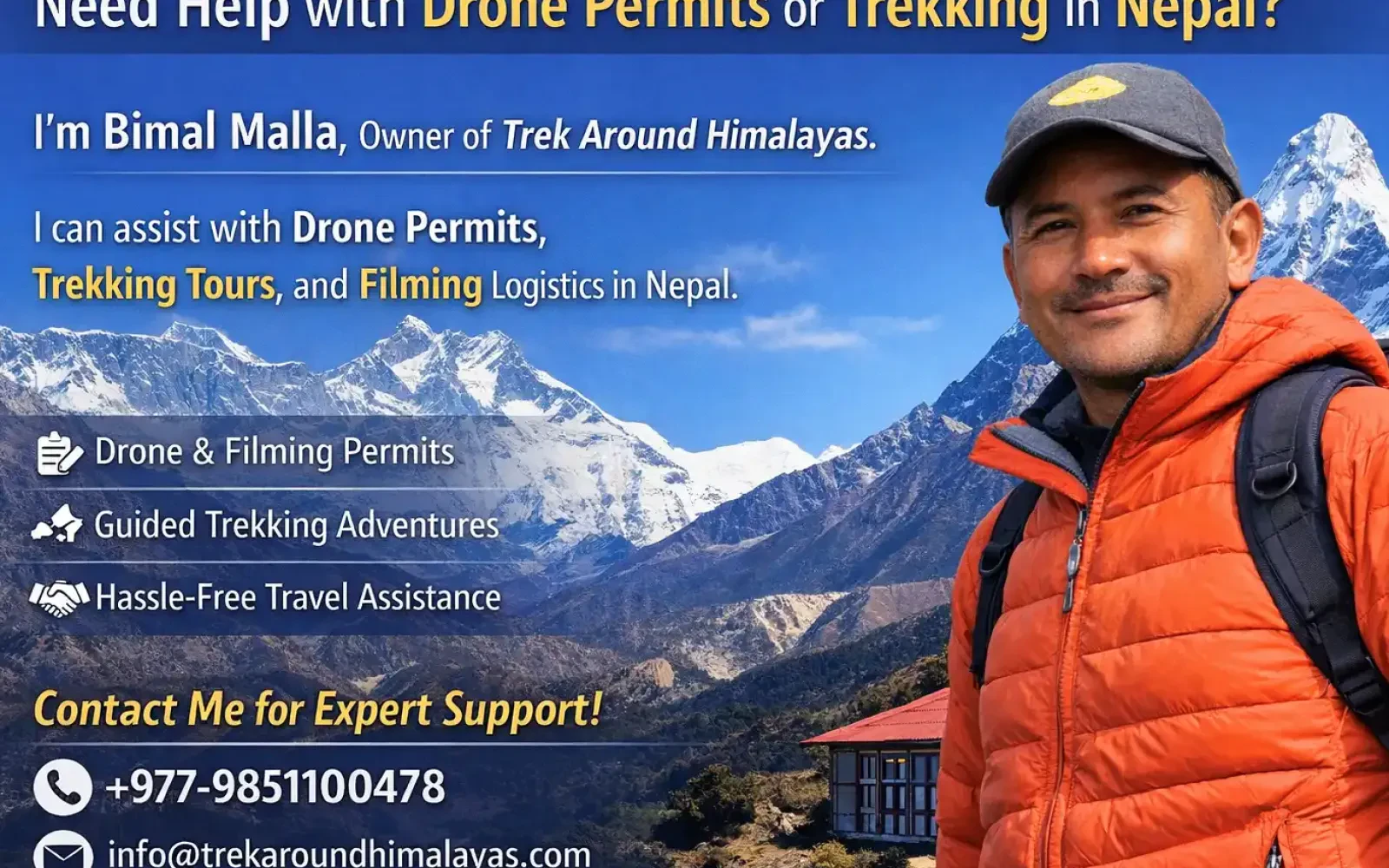
Need Help with Drone Permits or Trekking in Nepal?
If you have any questions or need detailed guidance about drone permits in the Everest region or anywhere in Nepal, feel free to reach out.
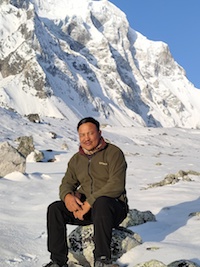
My name is Bimal Malla, and I am the owner of Trek Around Himalayas. I specialize in organizing trekking adventures across Nepal and also assist travelers with complex requirements like drone permits, filming permissions, and logistics in restricted regions.
From handling paperwork to guiding you through local regulations, I help make your journey smooth, legal, and stress-free—so you can focus on enjoying the Himalayas.
If you’re planning a trek, filming project, or drone adventure in Nepal, don’t hesitate to get in touch. I’m here to help you every step of the way.